Type 01 · Core
Core
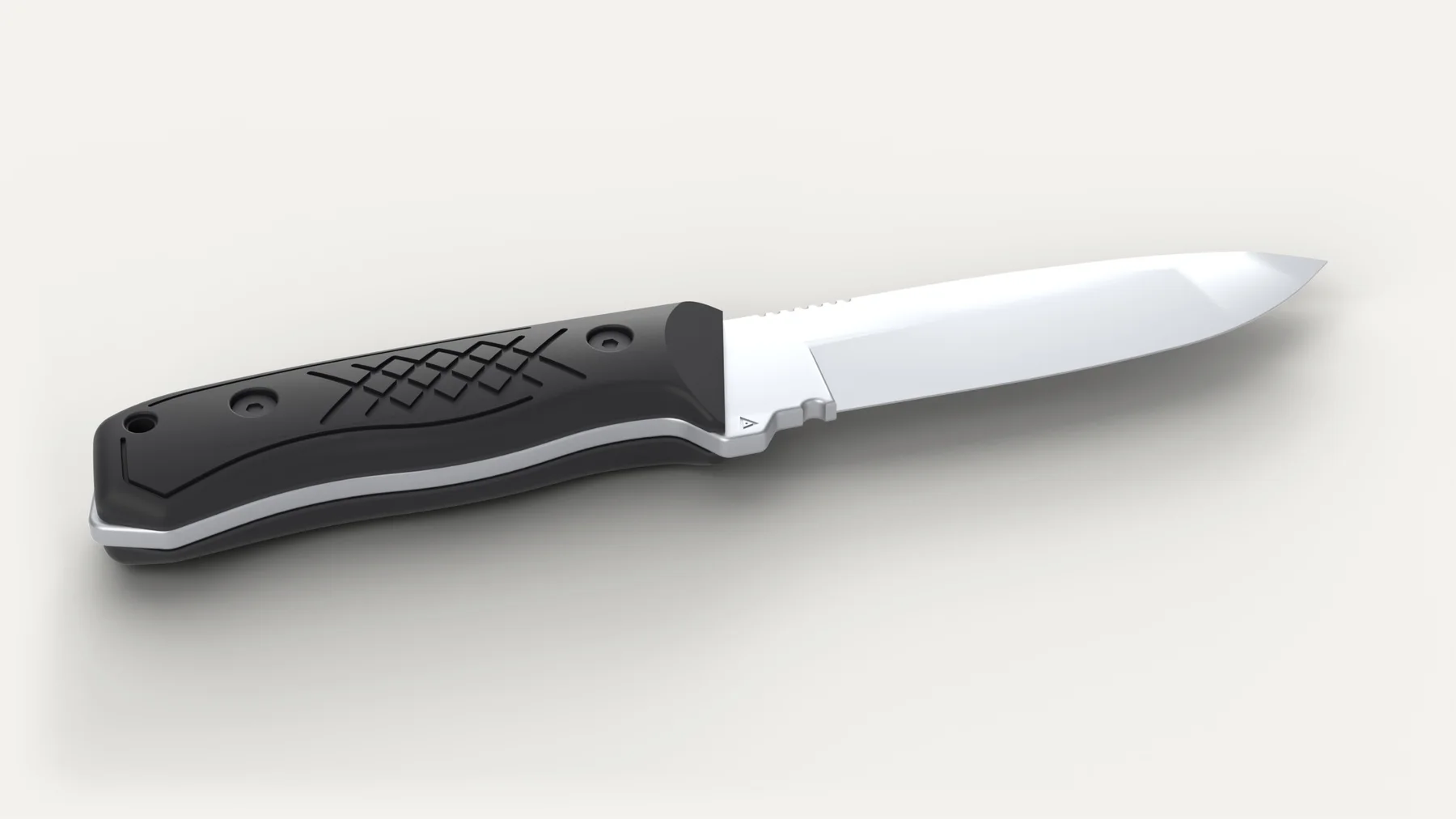
- Blade
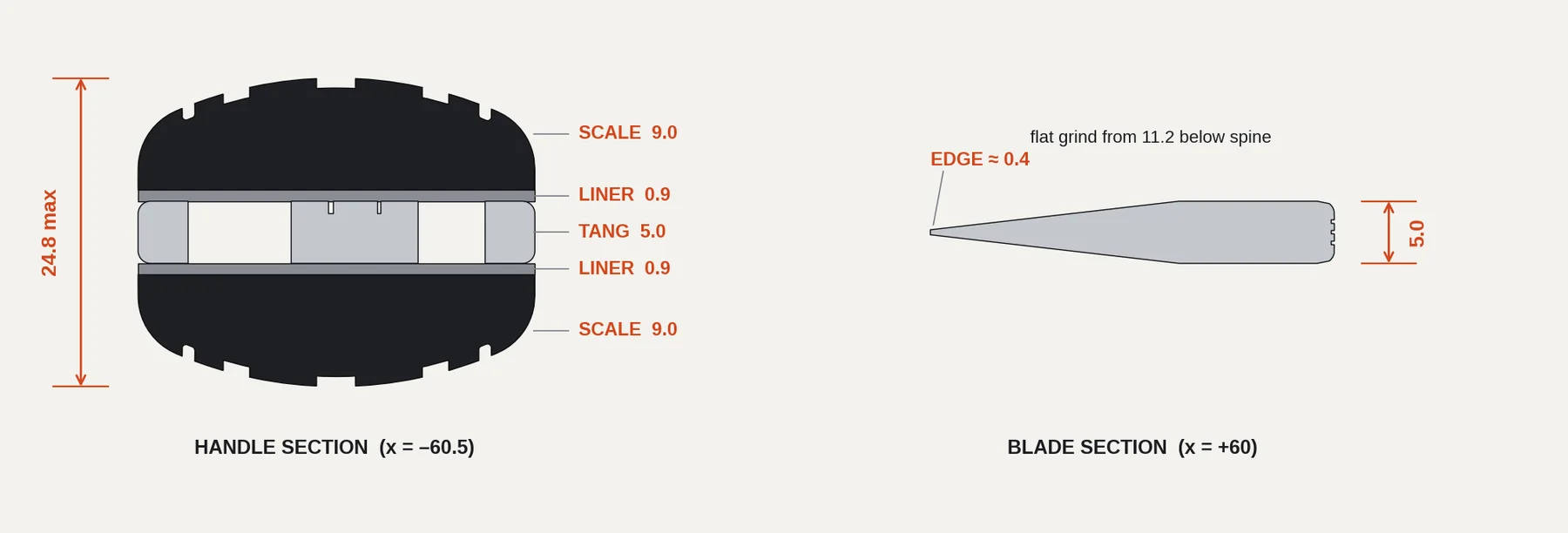
5.0 mm stock, full flat grind to a 0.4 mm edge. Laser-cut, then machined to shape.
- Steel
Böhler N690 from Austria. Cobalt-alloyed stainless, hardened to 58 HRC.
- Handle
Forprene grip over a full steel tang. Holds when wet, cold or gloved.
- Detail
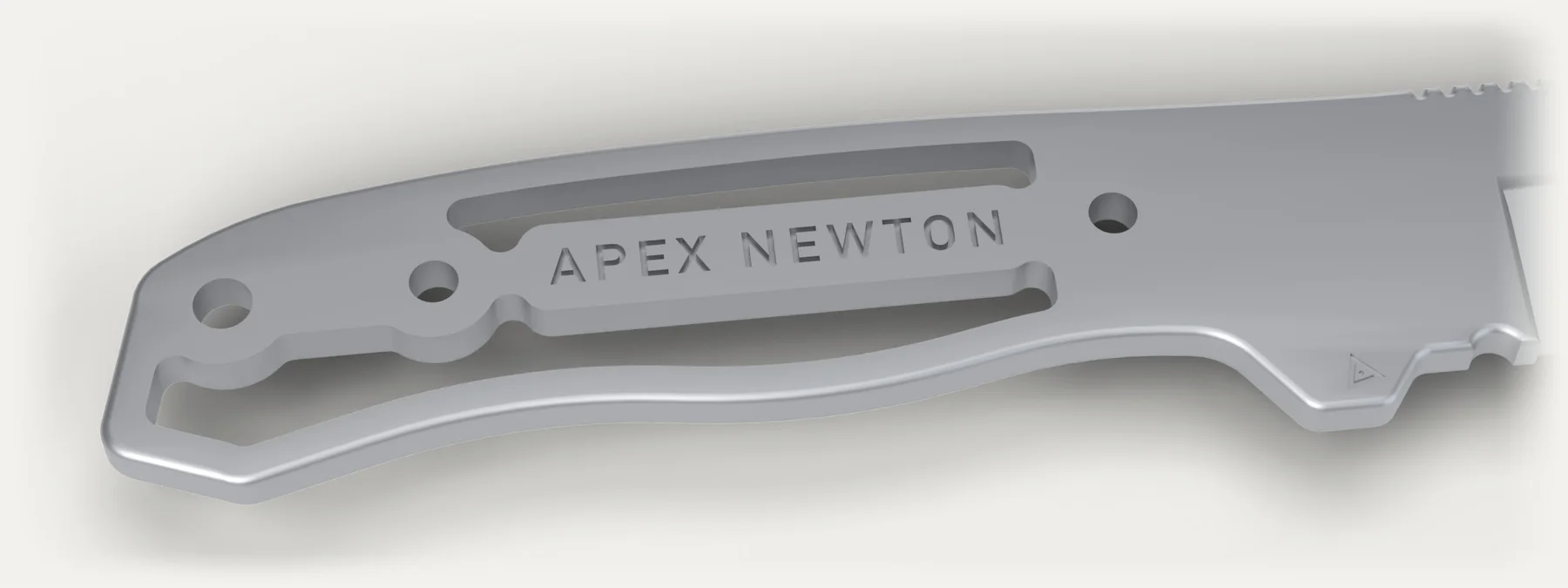
Lightened from inside. APEX NEWTON engraved 1.0 mm deep on spine and tang.
A 255 mm full-tang fixed blade. Austrian Böhler N690 steel, a Forprene grip and every surface drawn by us down to the tenth of a millimetre.
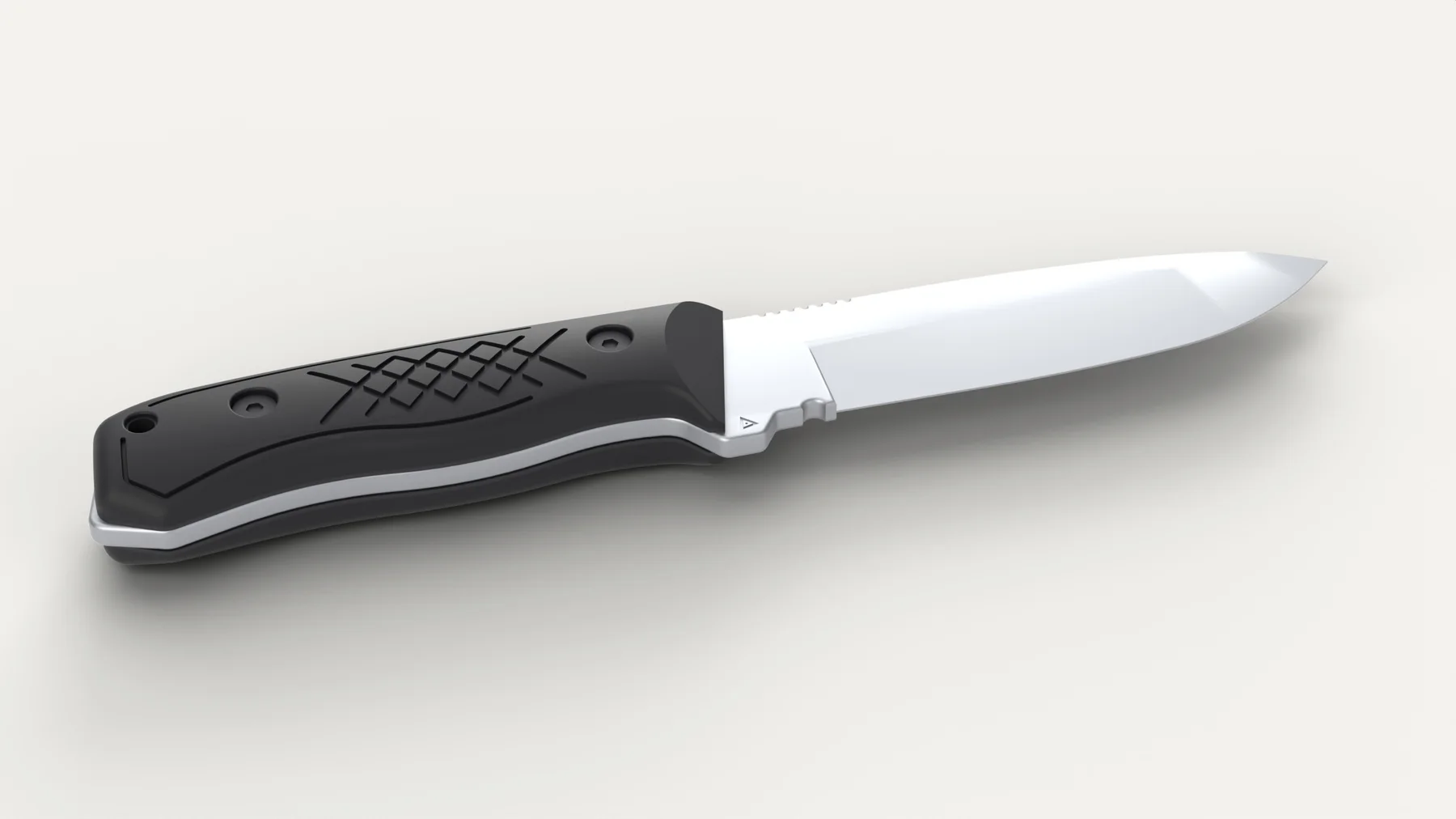
01 · Blade
Cut, machined, ground.
Beautiful even where you will never look.
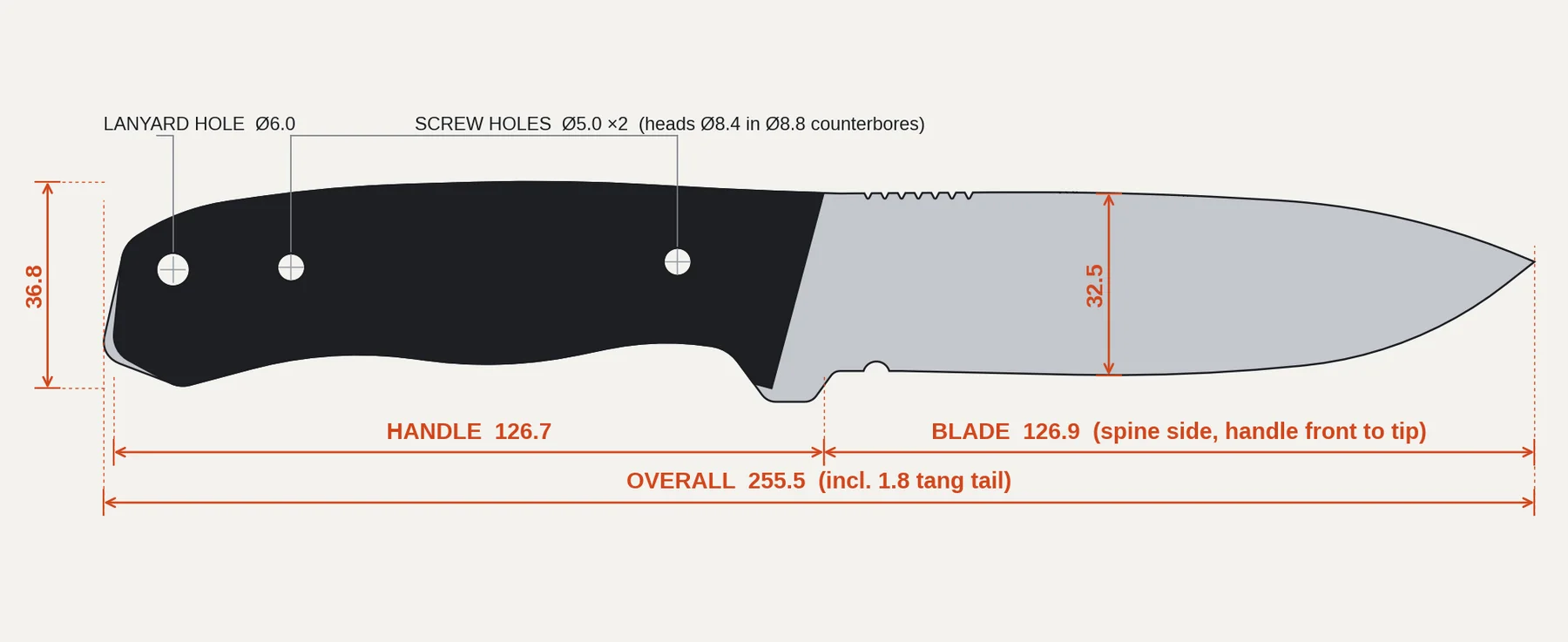
The profile is laser-cut from 5.0 mm N690 plate, then machined to its final shape. A full flat grind runs from 11.2 mm below the spine all the way down to a 0.4 mm edge: thin behind the edge so it slices clean, full thickness at the spine so it takes a beating.
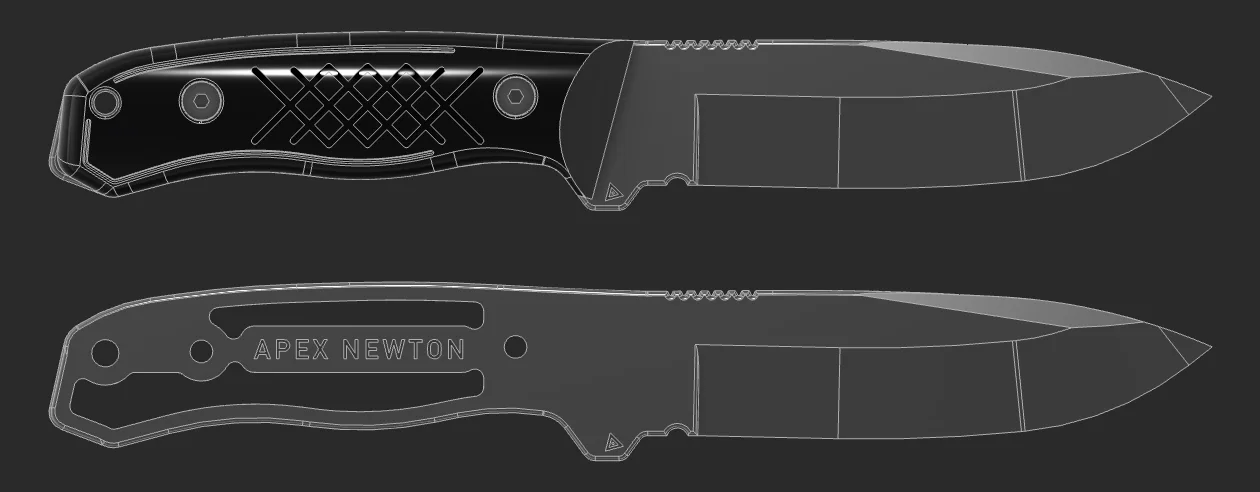
- Profile
- Drop point
- Cutting length
- 126.9 mm
- Stock
- 5.0 mm
- Grind
- Full flat, from 11.2 mm below spine
- Edge thickness
- 0.4 mm
- Blade height
- 32.5 mm
- Spine
- Flat, radiused edges, jimped
- Process
- Laser-cut, machined, ground
02 · Steel
Böhler N690.
Austrian steel, chosen for one job.
N690 is poured by Böhler Edelstahl in Kapfenberg, Austria. It is a martensitic stainless chromium steel with high carbon, alloyed with cobalt, molybdenum and vanadium. Böhler rates it for knives and for food contact. We chose it because it does three things at once: holds an edge, shrugs off moisture, and survives hard use.
Composition, weight %
| C | Cr | Mo | Co | V | Si | Mn |
|---|---|---|---|---|---|---|
| 1.08 | 17.3 | 1.1 | 1.5 | 0.1 | 0.4 | 0.4 |
Böhler N690 datasheet. 17.3 % chromium makes it stainless; 1.08 % carbon makes it hard; cobalt strengthens the matrix.
Böhler property ratings
Our heat treatment
- Target hardness
- 58 HRC
- Steel's range
- up to 59–61 HRC
- Hardening
- 1030–1080 °C
- Tempering
- 100–200 °C
Bending and impact
Hardness and toughness pull against each other. N690 can be pushed past 60 HRC; we stop at 58. That one point buys toughness: under side load the edge is more likely to roll than chip, and the 5.0 mm spine takes batoning without drama. A rolled edge is straightened in a few strokes. A chipped one is gone.
Edge holding and sharpening
Carbon and chromium form hard carbides that resist wear, which is why Böhler rates wear resistance very high. At 58 HRC the steel still takes a fine edge and comes back on diamond or ceramic stones. You get an edge that lasts, without a steel you need a workshop to sharpen.
Corrosion
Above roughly 13 % chromium a steel is stainless; N690 carries 17.3 %. Blood, sap, sweat and rain do not turn into rust overnight. Molybdenum adds resistance to pitting. Rinse, dry, done.
03 · Handle
Forprene.
Rubber grip, engineering-plastic precision.
Forprene is a thermoplastic vulcanizate: cured EPDM rubber locked inside a polypropylene matrix. It feels like rubber in the hand and is moulded with the accuracy of a technical plastic. We chose it over G10 and micarta because those are hard laminates. Forprene gives a little under the fingers and keeps its grip when wet, cold or gloved.
Material class
- Type
- TPV (EPDM + PP)
- Hardness scale
- Shore A, firm grade
- UV, ozone, weather
- Excellent
- Acids, bases, alcohols
- Resistant
- Detergents, solvents
- Resistant
- Fatigue, abrasion
- Resistant
- Thermal
- Insulating
Material ratings from the Forprene supplier.
Geometry
- Handle length
- 126.7 mm
- Height
- 36.8 mm
- Thickness
- 24.8 mm max
- Scales
- 9.0 mm each
- Surface
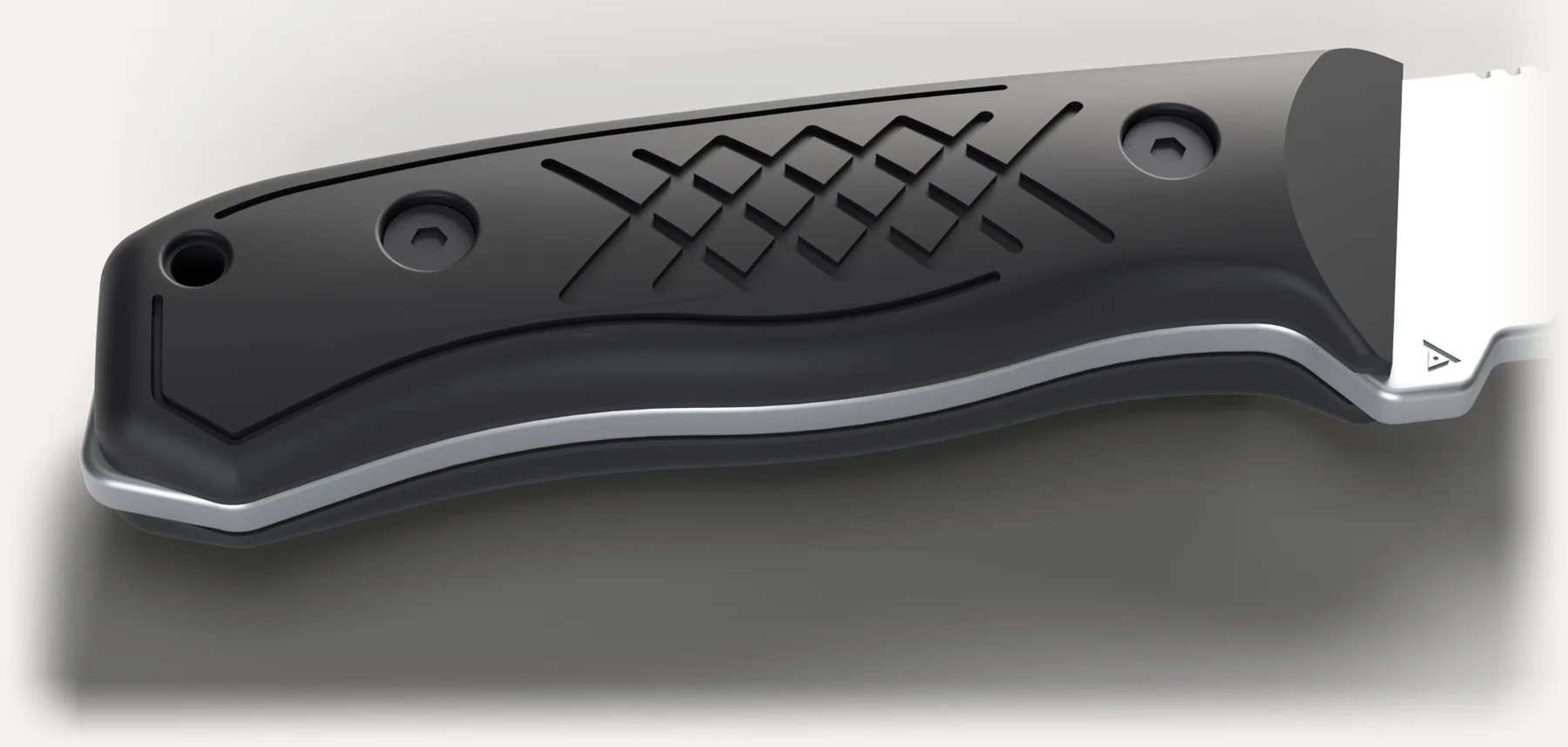
- Diamond lattice + contour grooves
- Front
- Slanted stop for the index finger
Soft where it touches, hard where it counts
The steel tang runs through the full handle, so strength comes from the metal and grip comes from the Forprene. The slanted front gives your index finger the same stop every time. The lattice gives traction without the sandpaper feel of aggressive texturing. And because it insulates, it does not suck the heat out of a bare hand in winter the way metal does.
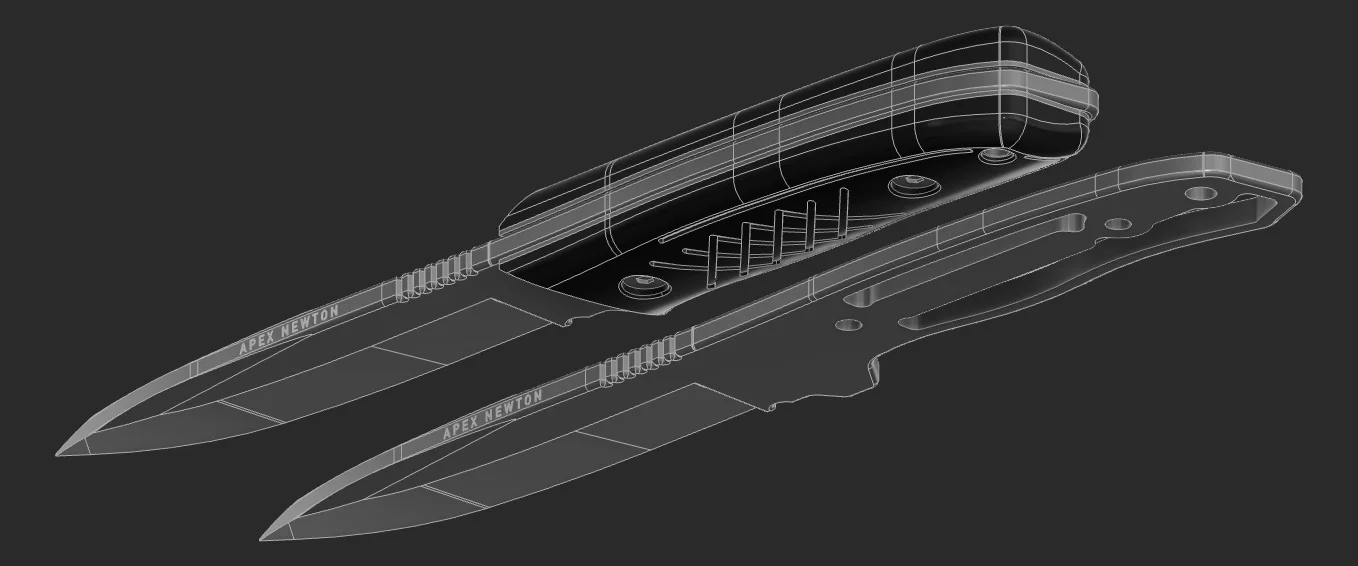
04 · Exploded view
Eight parts. Nothing hidden.
Two screws hold Core together. Every part is drawn and specified by us.
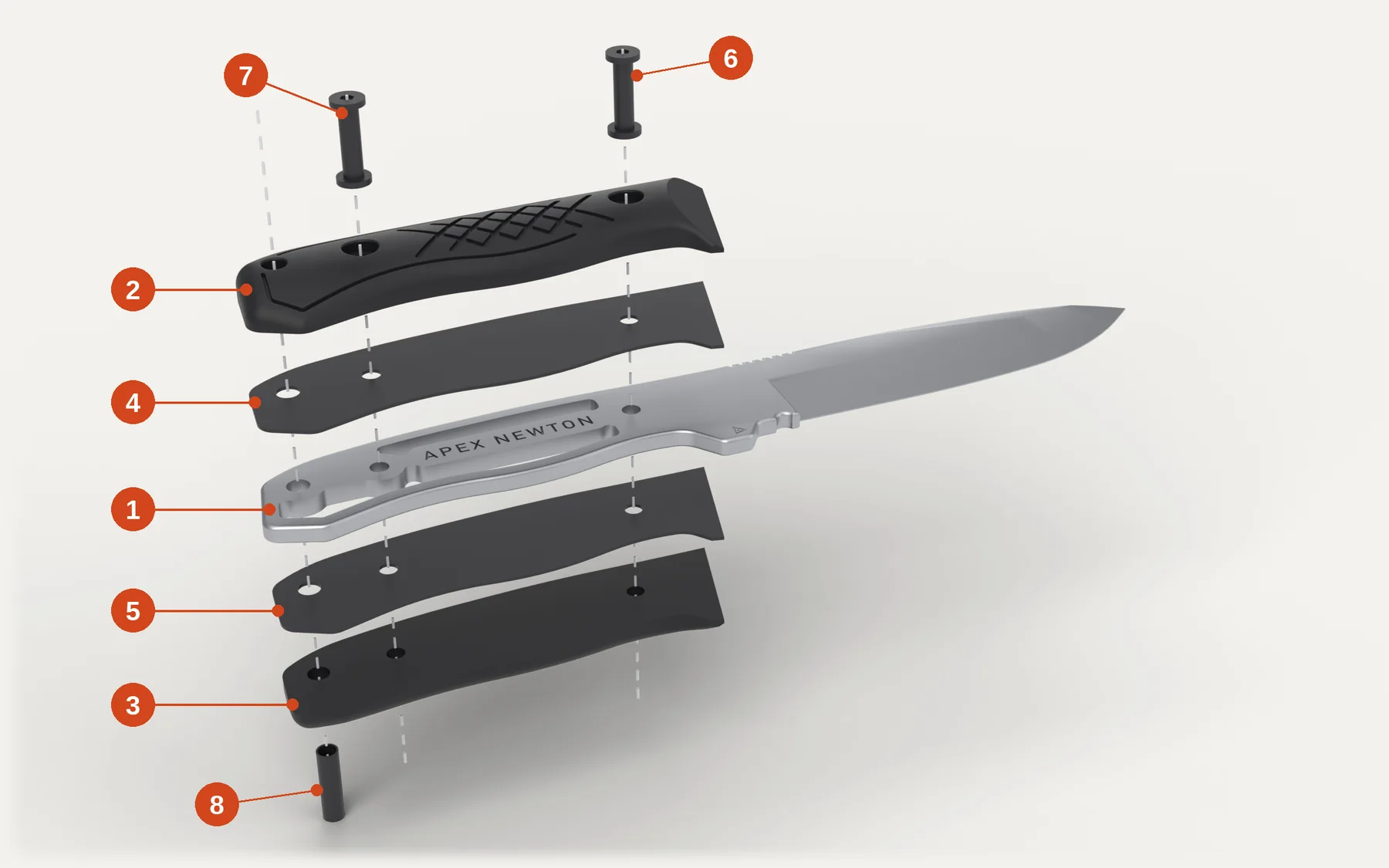
- 1Blade and full tang
One piece of Böhler N690, 5.0 mm thick, running the full length of the handle. Two lightening windows inside the tang, APEX NEWTON engraved 1.0 mm deep.
- 2 · 3Handle scales
Forprene, 9.0 mm each. Diamond-lattice relief, contour grooves along the edges, counterbored so the screw heads sit below the surface.
- 4 · 5Liners
0.9 mm plates between steel and grip. They separate steel from grip and draw a thin line around the handle.
- 6 · 7Screws
Hex-socket, Ø8.4 mm heads on Ø4.9 mm shanks. Two screws hold the whole knife together, so it comes apart for deep cleaning.
- 8Lanyard tube
Ø6.0 mm outside, Ø5.0 mm bore. Lined, so a cord never rubs on raw steel.
First production run
Reserve a Core
The first run is small, and its size is set by reservations. Reserve now and you are first in line when Core goes on sale at €249. Nothing is charged today.
Journal
All entries →Böhler N690 Steel: Composition, Hardness and Real-World Performance
What Böhler N690 knife steel is made of, how hard it gets, how it compares on edge retention, toughness and corrosion, and why we run it at 58 HRC.
Forprene vs G10 vs Micarta: Choosing a Knife Handle Material
A practical comparison of Forprene, G10 and Micarta knife handles: what each material is, how it grips wet and cold, and why we chose Forprene for the Core.
Full Flat Grind Explained: Why Blade Geometry Matters More Than Steel
What a full flat grind is, how grind height and edge thickness affect cutting, and the exact geometry we use on the 5.0 mm APEX NEWTON Core.